
Choosing your next great book should feel exciting, but an endless shelf of possibilities can make the decision surprisingly difficult. A bestseller may not suit your present interests. A highly rated business book may be too demanding for a busy week. Even a respected classic can remain unfinished when its style, subject or pace does not match what you need.
The solution is not to find the book everyone considers “the best”. It is to find the best book for you right now. That means considering your purpose, mood, preferences, schedule and preferred reading format before you buy.
Use the following framework to narrow your options and choose a book you are genuinely likely to enjoy, complete and remember.
1. Decide what you want from the reading experience
Begin with a simple question: What do I want this book to do for me?
Your answer could be entertainment, comfort, knowledge, encouragement, professional development, spiritual growth or a better understanding of another person’s experience. None of these purposes is more legitimate than another. The important thing is to know what you want before reviews, rankings and recommendations begin influencing your choice.
If your purpose is not yet clear, complete one of these sentences:
- I want to understand more about...
- I want help solving...
- I want a story that makes me feel...
- I want to become better at...
- I want to explore a world or perspective that is different from...
- I want something enjoyable that requires very little mental effort.
A reader trying to improve workplace communication needs a different book from someone seeking a fast-paced novel for a weekend. Defining the desired experience immediately removes many unsuitable options.
2. Match the book to your present season
Reading taste is not fixed. The right choice can change with your responsibilities, energy and emotional state.
A detailed academic title might be useful while preparing a research project but difficult during a demanding work period. A reflective book on purpose may be more relevant during a career transition than it was six months earlier. A light children’s story may be exactly what a parent needs for a shared bedtime routine.
Ask yourself:
- How much concentration do I currently have?
- Do I want to be challenged, encouraged, informed or entertained?
- Am I prepared for a long commitment?
- Does the subject support what I am dealing with now?
- Will the book’s emotional tone help me or weigh me down?
This is not permission to avoid every difficult book. It is a way to choose difficulty deliberately rather than buying a demanding title at the wrong time and assuming you have failed as a reader.
3. Identify what you actually enjoyed about previous books
Do not stop at saying, “I like fiction,” “I enjoy leadership books” or “I read biographies.” Categories are useful, but they are too broad to predict whether you will enjoy a particular title.
Think about the last two or three books you liked and identify the specific features that worked for you. Professional readers’ advisers often consider elements such as pace, characters, storyline, setting, mood, language and format when connecting readers with books.
You may discover that you prefer:
- Short chapters and practical exercises
- Fast-moving plots with clear stakes
- Character-driven stories about families and relationships
- Conversational writing rather than academic language
- Nigerian settings and culturally familiar experiences
- Carefully researched explanations with supporting evidence
- Quiet, reflective books rather than motivational intensity
- Audiobooks with an engaging narrator
Also note what you disliked. Perhaps a previous book was repetitive, too technical, emotionally heavy or filled with ideas that did not apply to your context. Your dislikes are useful filters, not signs that you are an inadequate reader.
4. Check the subject, style and depth
A title and cover can attract attention without accurately showing how a book approaches its subject. Before buying, inspect the description, table of contents, sample pages and available format information.
For nonfiction, ask:
- Is the book introductory, intermediate or advanced?
- Does it provide a broad overview or concentrate on one problem?
- Is the advice practical, evidence-based, reflective or inspirational?
- Does the author appear qualified to address the subject?
- Does the content apply to my country, profession or situation?
- Is the information current enough for my purpose?
For fiction, consider:
- What kind of story is this?
- Is it driven mainly by plot, character, ideas or atmosphere?
- Is the pace fast, steady or deliberately slow?
- What emotional experience does the description suggest?
- Are there themes or content I would prefer to avoid?
- Is it a standalone story or part of a series?
A book does not have to satisfy every criterion. These questions simply reduce the risk of choosing from the cover alone.
5. Use reviews as evidence, not instructions
Ratings can be helpful, but the average score does not tell you whether a book fits your particular preferences. One reader may criticise a novel for being slow while another values its careful character development. Someone seeking an advanced business strategy may find an introductory guide too basic, even though a new entrepreneur finds it ideal.
Look for reviews that explain why the reader liked or disliked the book. Comments about clarity, pace, examples, narration, depth and practical relevance are more useful than unsupported declarations that a title is “amazing” or “boring”.
Pay particular attention to repeated observations across several thoughtful reviews. If many readers independently describe a book as technical, emotionally intense or especially suitable for beginners, you have meaningful information for your decision.
Remember that popularity proves that a book has attracted attention; it does not guarantee a personal match.
6. Read a sample whenever one is available
A sample helps you evaluate the author’s voice more directly than a review can. BestBooks provides a dedicated free-samples area for titles whose samples are available.
While sampling a book, check whether:
- The opening creates curiosity
- The language is clear and comfortable for you
- The author’s tone feels trustworthy
- The examples or characters hold your attention
- The chapter structure suits the way you read
- You naturally want to continue
Do not expect every worthwhile book to capture you within one paragraph. Some need time to establish their argument or world. However, a sample can reveal an obvious mismatch before you commit your money and reading time.
7. Choose the format you are most likely to use
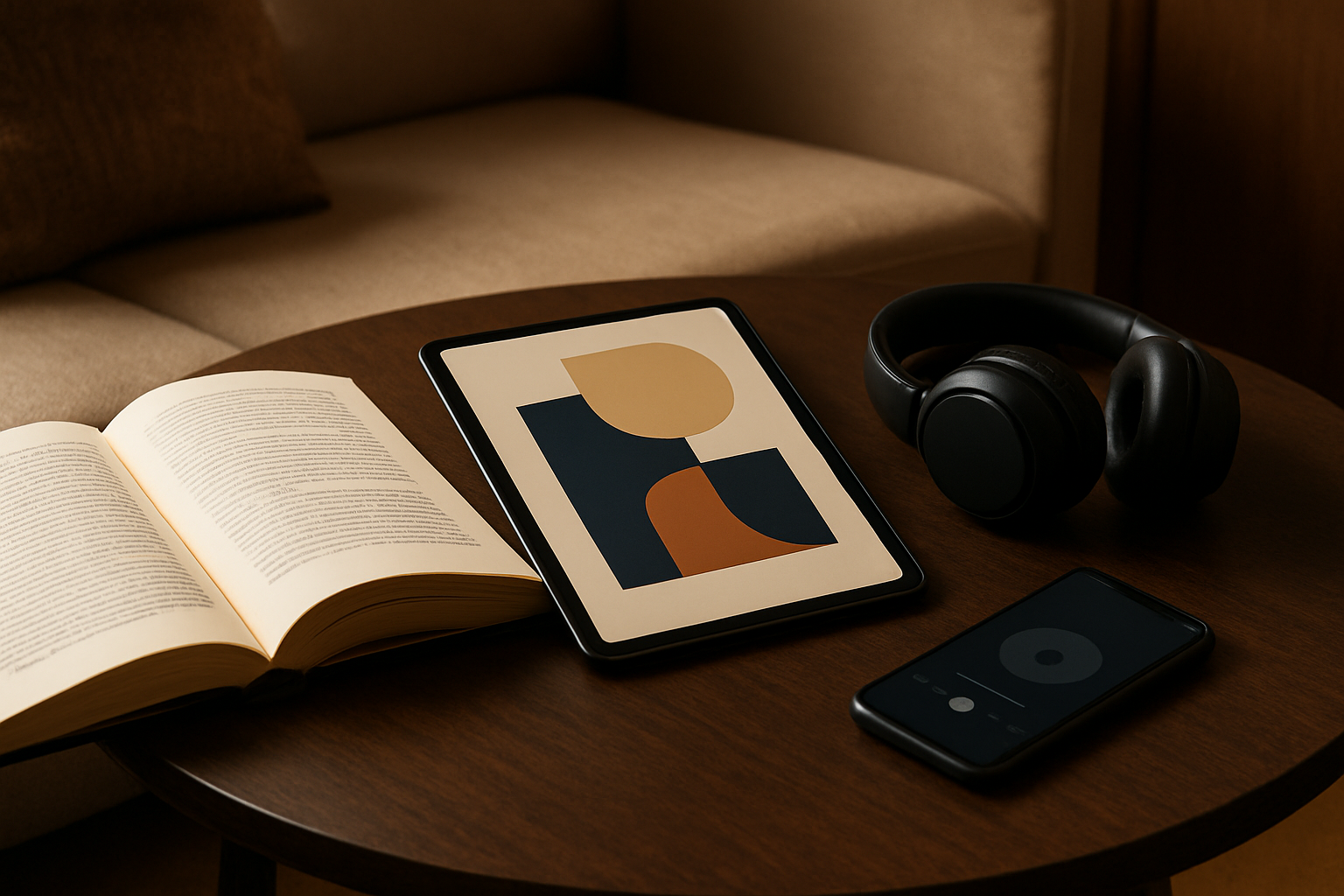
The content matters, but format can determine whether the book becomes part of your life or remains untouched.
Printed books
Choose print when you enjoy a physical reading experience, want to annotate pages, prefer fewer digital distractions or plan to keep, lend or display the book. Printed editions can also work well for group study and family reading.
Ebooks
An ebook may be the better option when you want immediate access, carry several titles on one device or read during short openings in your day. Before purchasing, confirm that your device and reading environment are comfortable enough for sustained screen reading.
Audiobooks
Audiobooks can fit commutes, exercise, housework and other periods when your eyes are occupied but your attention is available. Listen to any available preview because narration style, pace and sound quality strongly influence the experience.
The best format is not necessarily your favourite in theory. It is the one that fits the places and times in which you will actually read or listen.
8. Be realistic about your time
Many abandoned books are not bad choices in subject; they are poor choices in scale.
Estimate how much reading time you can protect each week. If you have fifteen minutes most evenings, a short practical book or a title with self-contained chapters may be easier to sustain than a complex 600-page work. If you are on holiday or preparing for an examination, your capacity may be different.
Try matching the book to a realistic reading window:
- A few minutes daily: essays, devotionals, short chapters or poetry
- Commuting or repetitive tasks: audiobooks with a clear narrative or structure
- Weekend reading: engaging fiction, biographies or accessible nonfiction
- Focused study: academic, professional or technical books with time for notes
You do not need to select only short books. You need a practical plan for the book you select.
9. Build a shortlist instead of hunting for one perfect answer
Trying to identify one flawless book can produce decision fatigue. Create a shortlist of three titles instead.
For each option, compare:
- Relevance to your present goal
- Interest in the subject or story
- Suitability of style and depth
- Available format
- Price and overall value
- Time required to finish it
Then choose the title with the strongest overall fit. Save the remaining options for later rather than treating them as rejected books.
If you are exploring the BestBooks catalogue, you can compare books across Nigerian Authors, Fiction, Non-Fiction, Business, Self-Help, Leadership and Management, Christian and Ministry, Children, Academic, ebooks and audiobooks. Catalogue availability, editions and prices should always be confirmed on the relevant book page before purchase.
10. Give yourself permission to stop
Finishing every book can build discipline, but continuing every unsuitable book can turn reading into an obligation. If a title is no longer useful or enjoyable, pause and diagnose the problem.
Ask whether the book is:
- Wrong for your purpose
- Right for your purpose but wrong for this season
- Too advanced without introductory knowledge
- Useful enough to skim rather than read from beginning to end
- Better suited to audio, ebook or print
- Simply not a good match for you
You may decide to continue, switch formats, skip selected chapters, return later or stop completely. The objective is not to collect completed titles at any cost. It is to gain meaningful reading experiences.
A quick checklist for choosing your next book
Before making your final decision, confirm the following:
- I know what I want from this reading experience.
- The subject or story matches my current interests.
- The style, pace and depth suit me.
- I have checked the description and any available sample.
- I have used reviews to understand the book rather than follow popularity.
- I have chosen a format I will genuinely use.
- I have enough time and attention for the commitment.
- The price represents reasonable value for my purpose and budget.
If most of these statements are true, you probably have a strong candidate.
Find a book that fits your life now
Your next great book does not have to be the newest release, the longest title or the book receiving the most public attention. It needs to meet you at the intersection of curiosity, purpose, capacity and opportunity.
Browse the BestBooks catalogue at /books, discover writers through /authors, or visit /free-samples to preview available titles. Start with two or three promising options, apply the checklist and choose the book you are most likely to open again tomorrow.
Research sources
- American Library Association guidance on readers’ advisory and connecting readers with books through appeal and genre factors. [source]
- American Library Association discussion of appeal factors including character, plot, setting, language, genre, pace, mood and format. [source]
- Reference and User Services Quarterly discussion of using character, language, mood, setting and story to connect readers with suitable books. [source]
- American Library Association collection guidance covering relevance, intended audience, authority, clarity, currency, user appeal, format and reviews. [source]
Sources and Further Reading
- www.alsc.ala.org
- journals.ala.org
- www.ala.org
- www.ala.org
- www.unesco.org
- www.unesco.org
- journals.ala.org
- www.ala.org
Browse books on BestBooks
Continue from useful ideas to books worth reading and keeping.
Don’t stop at the idea. Find the book that takes you further.
Discover original printed books, ebooks and audiobooks from Nigerian and global authors.